Listening to the Trees: Patrick Barron’s BOSK and the Art of Deep Attention
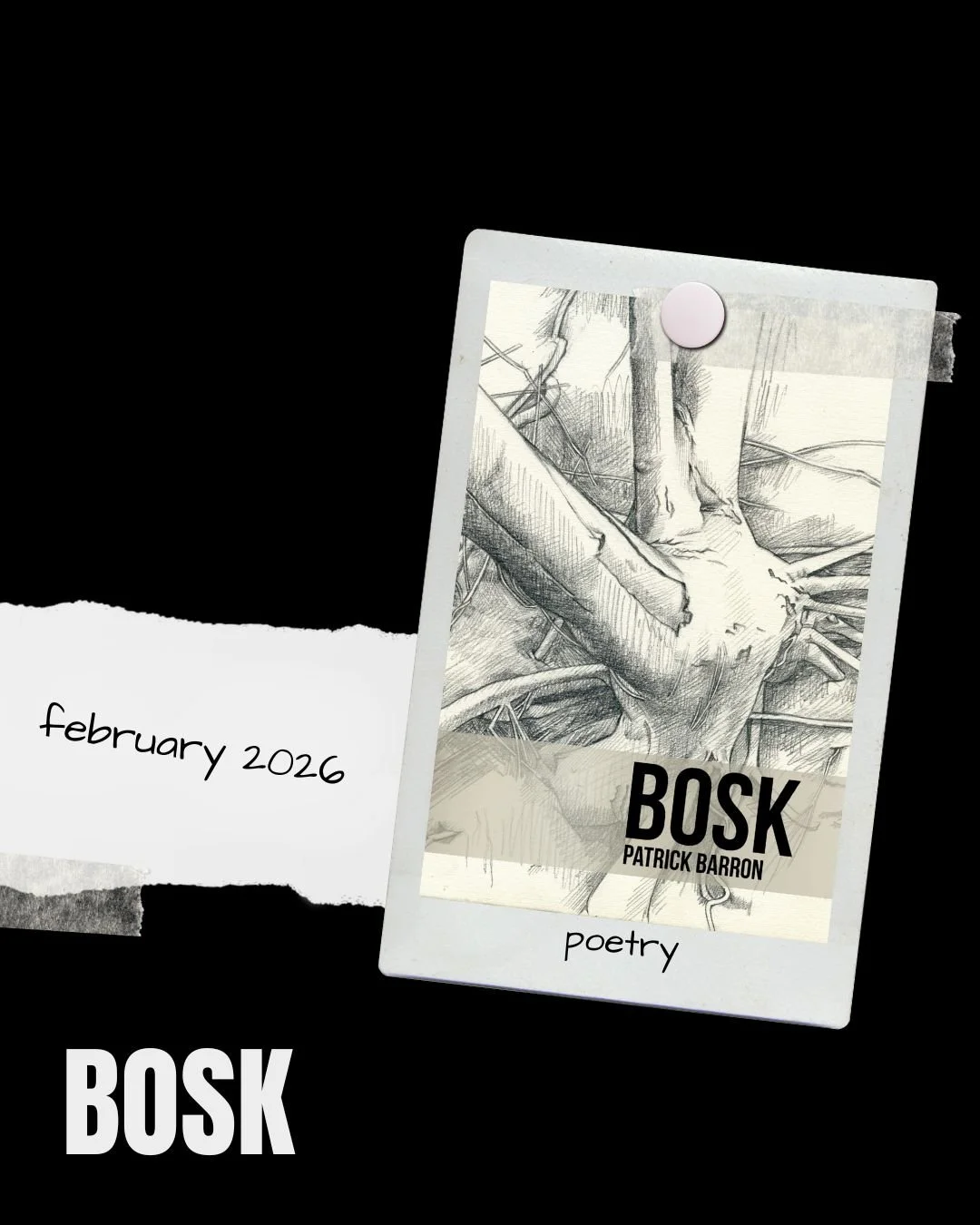
What happens when you wander without purpose—no destination, no productivity metrics, no checking your inbox every five minutes—and instead follow whatever tugs at your senses? For Patrick Barron, what happens is Bosk, a collection of short, exquisitely attentive poems shaped by encounters with the trees and shrubs of a sprawling Boston arboretum.
Written during slow, meandering walks, these poems grew out of fleeting moments: the twist of a branch, the flicker of a seedpod, the way a shadow interrupts your thoughts and demands to be acknowledged. Bosk is full of these sensory invitations, each one opening the door to a deeper kind of perception.
In the collection, Barron asks how paying attention to nonhuman beings can both distort and sharpen our relationship to the world. What starts as botanical noticing—textures, colors, shapes—becomes something more: a rekindling of connection, a soft antidote to apathy, a reminder that the membrane between self and environment is thin, porous, and always shifting.
The poems also revel in linguistic play. Each piece begins with the abbreviated Latin name of a plant species, letting the shapes of those names unfurl into new words, patterns, and sonic textures. Barron maps the overlaps between plant morphology and human language, creating a field guide that is part poetry, part philosophy, and part quiet rebellion against numbed attention.
Bosk invites readers to slow down, wander, and listen—really listen—to the world around them. In an era of relentless noise, Barron’s poems offer a different way forward: rooted, curious, and deliciously alive.
Releasing February 28, 2026 from Unsolicited Press.