Where Culture Is Made: Amy Shimshon-Santo’s Piecework and the Art of Building Place
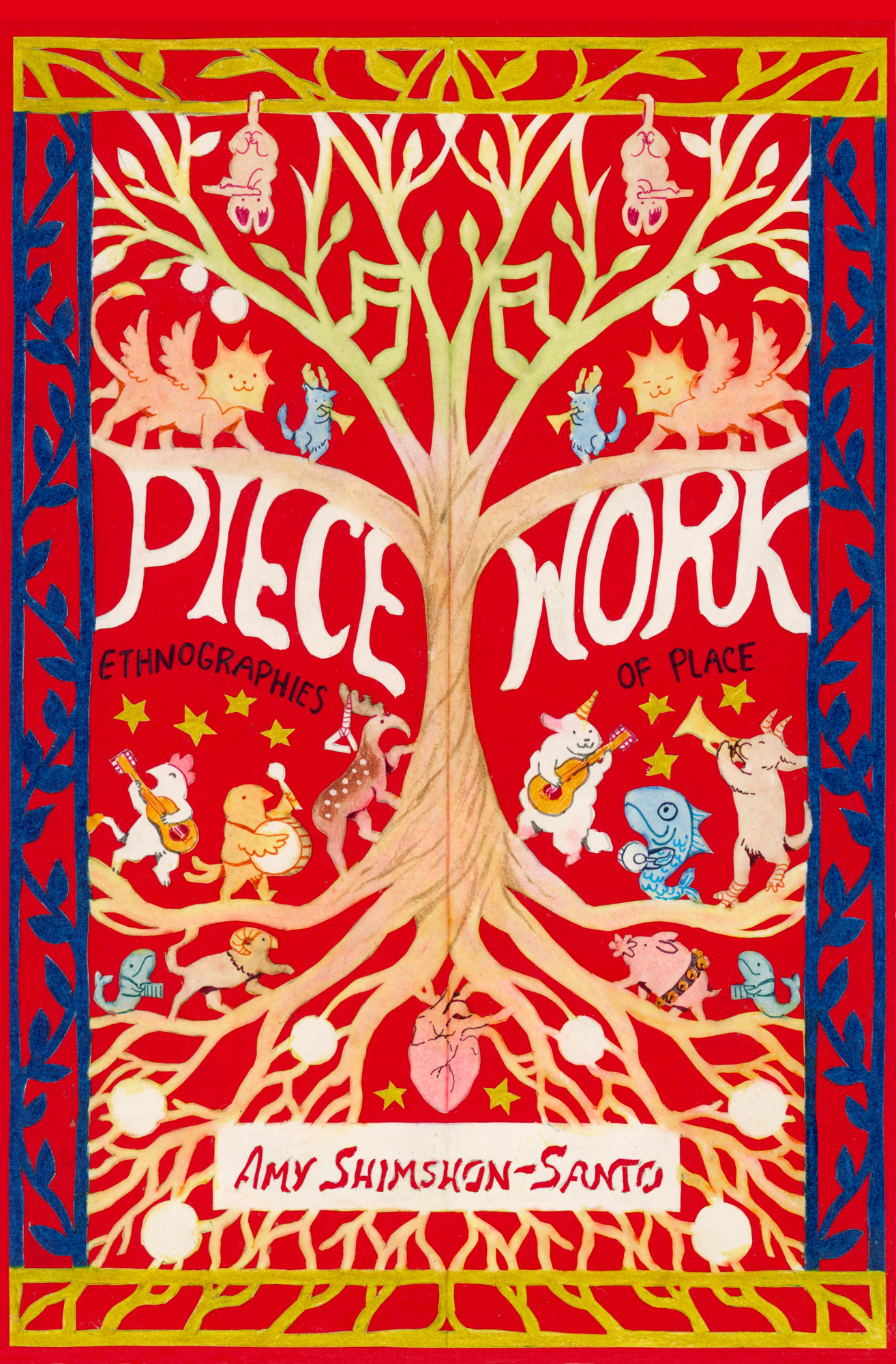
There are books that describe the world, and then there are books that sit inside it, listening closely to how people build meaning together. Amy Shimshon-Santo’s Piecework: Ethnographies of Place belongs to the latter. It moves through classrooms, archives, migration histories, and community spaces with a sense of attention that feels both intimate and expansive, asking what it means to create culture from the ground up.
At its core, Piecework is a book about process. Not polished outcomes or tidy narratives, but the slow, collaborative labor of making art, shaping education, and sustaining community across generations. Shimshon-Santo writes from the perspective of someone deeply embedded in cultural work. Her essays blur the line between ethnography and personal narrative, allowing readers to witness how knowledge forms through movement, relationships, and lived experience rather than distance or authority.
The book unfolds across three interconnected terrains: classrooms, communities, and migrations. In the classroom essays, education becomes a space of experimentation rather than containment. Students engage in design, dance, poetry, and storytelling as ways of thinking through the world, while teachers and artists navigate the tension between structure and imagination. These moments feel less like case studies and more like living scenes where young people claim agency through creative practice.
The community-centered essays shift outward, tracing networks of artists, activists, and cultural organizers working to reshape the spaces they inhabit. Here, collaboration becomes both method and subject. Youth storytellers transform personal pain into collective expression. Curators revisit historical narratives, lifting up matriarchal lineages and reimagining how cultural memory is preserved. Across these pieces, place is never static. It is negotiated through conversation, conflict, and shared effort.
Migration threads quietly through the collection, surfacing through archival research and familial history. Shimshon-Santo approaches ancestry not as nostalgia but as an evolving dialogue between past and present. The essays explore displacement and resilience without flattening complexity, revealing how artistic practice often becomes a bridge between generations and geographies. Interviews with cultural promoters in Nigeria and Brazil widen the scope further, reminding readers that cultural work rarely exists within borders.
What makes Piecework compelling is its refusal to choose between scholarship and storytelling. The writing is intellectually rigorous yet grounded in lived experience, inviting readers into a space where theory feels embodied and narrative feels purposeful. It is a book that asks readers to slow down and consider how creativity operates within everyday life. How classrooms become stages for transformation. How communities gather to imagine new futures. How memory travels through art.
The title itself suggests the ethos of the collection. A piecework is assembled from fragments, from small acts of labor that accumulate into something larger. Shimshon-Santo’s essays mirror that structure, weaving together voices, histories, and moments that might otherwise remain separate. The result is a portrait of culture not as a singular narrative but as a tapestry shaped collectively over time.
In an era when conversations about education, migration, and cultural identity often feel abstracted from lived experience, Piecework brings us back to the ground level. It reminds us that the most meaningful transformations begin locally, within the relationships and creative practices that sustain communities. The essays do not offer easy answers. Instead, they create space for reflection, curiosity, and a deeper understanding of how art intersects with everyday life.
Piecework: Ethnographies of Place invites readers into a practice of listening. To classrooms alive with experimentation. To archives carrying ancestral voices. To communities shaping their own stories through collaboration and imagination. It is a book that lingers, not because it insists on conclusions, but because it asks us to keep paying attention to the ways culture is made, remade, and shared.