What Does Your Job Take Home With You?
There is the work we are paid to do, and then there is everything that comes home with us. The sore back. The customer who pissed us off at 9:14 in the morning. The thing somebody said in a meeting that we're still arguing with while brushing our teeth. The smell in our hair. The email we shouldn't check from bed but do anyway. The peculiar pride of being very good at something we never expected to spend our lives doing.
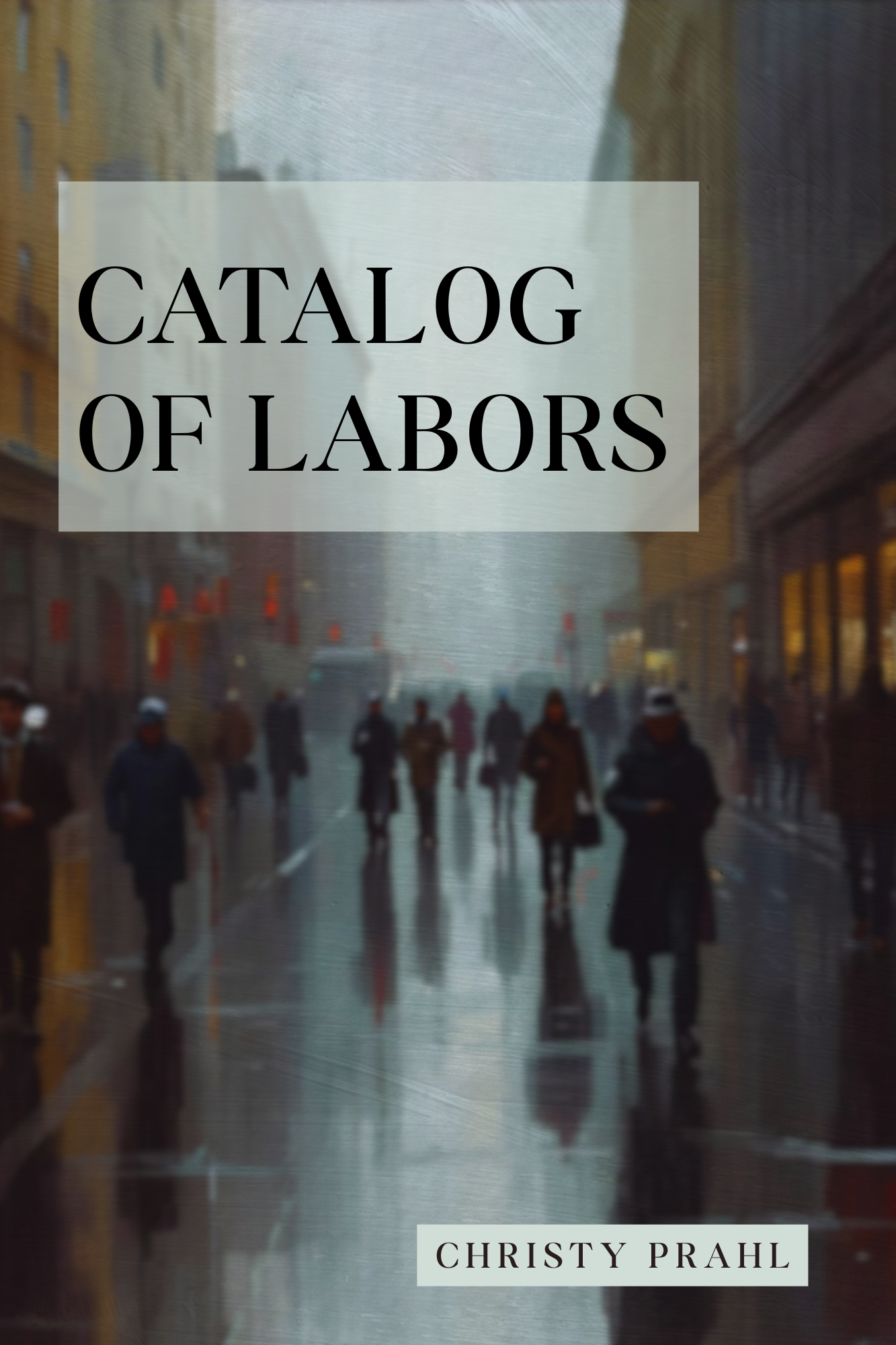
Work gets into us. Christy Prahl's new poetry collection, Catalog of Labors, starts there. The book contains twenty poems named for jobs: “The Massage Therapist.” “The Bank Teller.” “The Meteorologist.” “The Sanitation Worker.” “The Barista.” “The Vacuum Cleaner Dealer.” “The Baker.” “The Professor.” “The Makeup Artist.” “The Minister.” And onward, through the strange ecosystem of things people do because money exists and rent remains stubbornly due.
Her workers are irritated. Horny. Grieving. Bored. Funny. Lonely. Devoted. Petty. Proud. Exhausted. They are thinking about their children and lovers and dead parents while performing jobs that require them to keep functioning anyway. The massage therapist follows the architecture of another person's body while wondering what pain put the knots there. The barista has reached the end of her patience with the man ordering his absurdly hot cappuccino every morning. The sanitation worker comes home smelling like the job and is still climbed over by the family that loves him.
And then there is the vacuum cleaner dealer, which may be one of the most unexpectedly tender portraits of small business in the book. He repairs machines. He knows how they fail. He has put three children through college. He struggles with rent. Internet shopping has taken thousands of dollars from his business, and still, stubbornly, he believes things should be repaired rather than thrown away.
At the end of the poem, he demonstrates a rebuilt machine.
He dances. She hums.
There is an entire economic philosophy hiding in there if you want one. But Catalog of Labors works because Prahl doesn't turn these people into symbols and leave them there. The workers remain people. Messy ones.
A professor attends a marathon reading of Ulysses while hiding the fact that he is dying. A housekeeper serves food to children who barely seem to see her. A window washer suspended outside a corner office understands that the man behind the glass has his own private life and elects, for once, not to look inside.
Then there is the plumber. He birdwatches. He moisturizes. He loves a well-designed bathroom. He knows systems, especially the ones that keep choking along until they rust. His partner is tired. He is more tired. Every morning he puts on one of seven gray work shirts and leaves for another appointment. The poem ends:
“This is who I am.
This is my name.”
Maybe that is the real question running underneath this book. When somebody asks what you do, why is the answer so often another way of saying who you are?
Prahl comes by the question through generations of workers. Her acknowledgments trace a family history through factory work, food service, farming, restaurants, teaching, administration, sales, insurance, organizing, and parenting. Her grandmother, a high school cafeteria cashier, helped organize food-service workers and confronted a school board that insisted it respected them. When she asked the board members to tell her her name, none of them could.
That is what Catalog of Labors keeps returning to. Not jobs as economic categories. Not inspirational posters about hard work. Not another sermon about doing what you love so you'll never work a day in your life, a sentence that has probably caused enough damage already. People. People selling their time. People making things. People cleaning up after us. People teaching us. People fixing what breaks. People caring for bodies. People answering the phone when something stops working.
And somehow, between clocking in and clocking out, they keep having entire lives. Catalog of Labors by Christy Prahl is out now from Unsolicited Press. Paperback, 54 pages, $18.95. Come meet the people doing the work.